
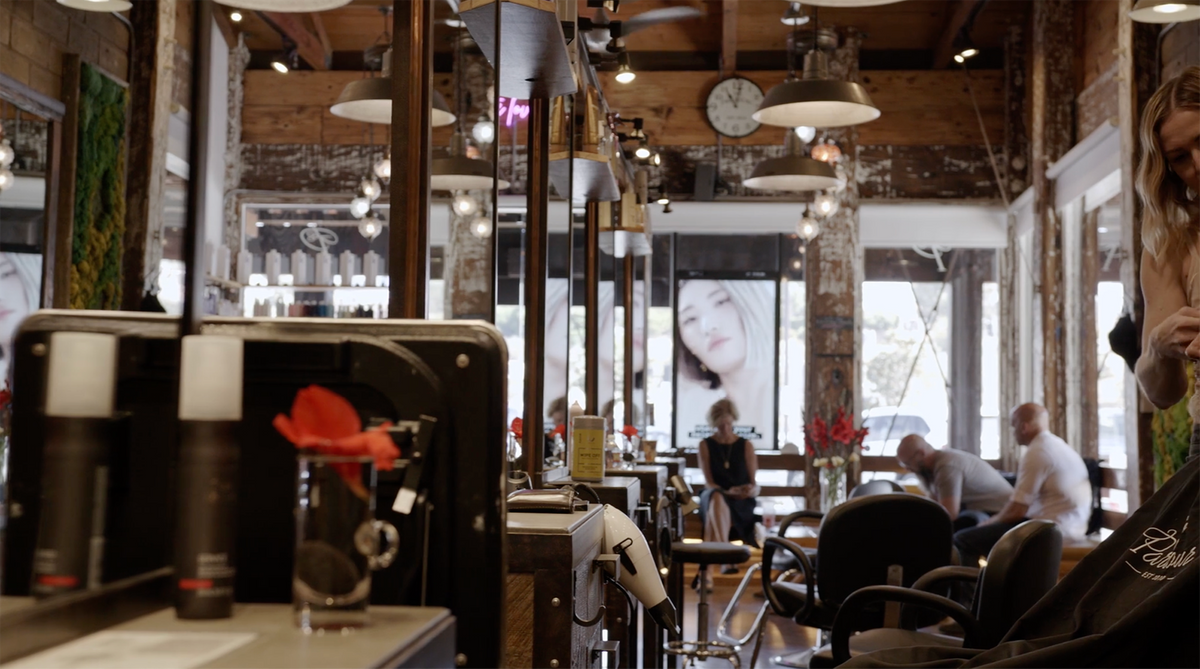
Walk into most salons and you can immediately tell where the retail area is. It’s usually a wall, shelves lined with product, everything technically “there,” but not always doing much. And that’s where the disconnect starts.
Because while the service side of the salon has evolved, becoming more customized, more immersive, and more experience-driven, retail in many cases still feels static. Passive. Easy to overlook. Not because the products aren’t good, and not because guests don’t want them, but because the experience around them hasn’t kept up with how people actually shop today.
Guests aren’t just looking to be told what to use. They want to understand it. They’re used to interacting with products before they buy, whether that’s through quick demos, visual comparisons, or self-guided exploration. They want to feel confident in their decisions without having to rely entirely on memory or a single moment of explanation. When that layer is missing, hesitation naturally follows. Products get glanced at but not picked up. Recommendations get forgotten. The intention to purchase gets pushed to “later,” which more often than not means it doesn’t happen at all.
In many salons, retail still relies heavily on the stylist to carry the full weight of that experience. The recommendation happens in the chair, and the follow-through depends on timing, communication, and how much information the guest can retain in the moment. While that connection is important and often the starting point, it’s not always enough on its own. Not every guest processes information the same way, and not every appointment leaves room for a full breakdown of products, benefits, and usage. Without something to reinforce that conversation, it’s easy for the moment to pass.
This is where the physical space itself starts to matter more. A well-designed retail environment should extend the conversation, not replace it. It should give guests a way to engage with what’s in front of them, visually, physically, and even intuitively, so they can continue exploring at their own pace. When retail becomes interactive, it shifts from something guests walk past to something they naturally move toward.
That interaction doesn’t have to be complicated, but it does have to be intentional. Clear organization, thoughtful layout, and subtle cues that guide decision-making can make a significant difference. Even small additions like movement, lighting, or dynamic content can create a moment of curiosity that draws someone in. The goal isn’t to overwhelm or oversell. It’s to make the space feel approachable, engaging, and aligned with the level of experience the guest just had in the chair.
Design also plays a practical role. Many salons face limitations around how products can be displayed, especially when it comes to security. When items are locked away or positioned in a way that discourages touch, it can unintentionally create distance between the guest and the product. Finding ways to confidently display live products while maintaining control allows the space to feel more open, more accessible, and ultimately more effective.
This is where retail is starting to shift. More salons are moving beyond traditional shelving and into environments that support discovery, education, and ease. Instead of relying solely on conversation, they’re creating spaces that help guests understand what they’re looking at, compare options, and feel more confident in their choices without added pressure.
Some of that shift is being driven by the integration of digital elements, things like motion-triggered displays, short-form educational content, and “lift and learn” technology that responds when a guest picks up a product. Partners like Inovshop are helping salons bring this to life in a way that feels seamless rather than overwhelming.
“I’m passionate about helping salons grow their retail and services—while turning every screen into a powerful revenue opportunity,” says Dana Funk, Sales Ambassador.
By combining interactive displays with secure, thoughtfully designed fixtures, they create retail environments that support both the guest experience and the operational side of the business.
The result isn’t just a more modern-looking space. It’s a more functional one. Guests stay engaged longer. They have more clarity around what they’re choosing. And the retail area begins to feel like a natural extension of the service, rather than an afterthought.
At the end of the day, your retail space doesn’t need to be bigger. It needs to be more intentional. Because when the environment is working with you, supporting the conversation, reinforcing the recommendation, and inviting the guest in, it changes how people interact with it.
And that’s where the difference starts to show.